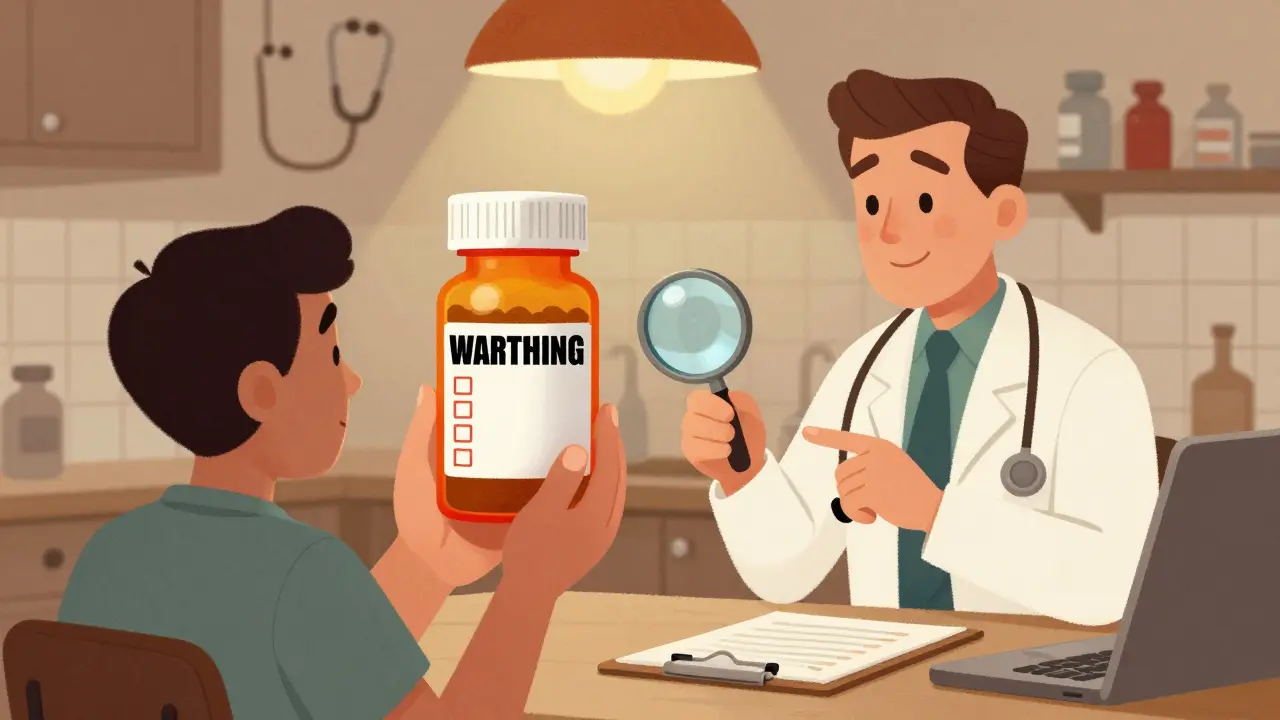
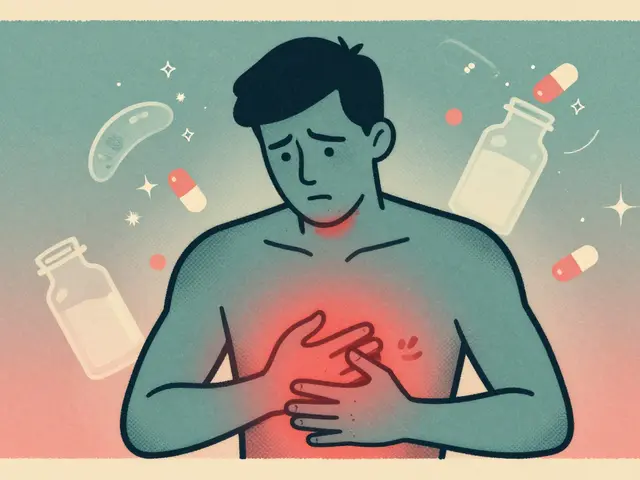
Have you ever opened your pill bottle and seen a bold, black-bordered warning on the label? It might have made you pause. Maybe you even wondered if you should stop taking your medicine. That’s a black box warning - and it’s not there to scare you. It’s there to make sure you know what you’re dealing with.
What Exactly Is a Black Box Warning?
A black box warning, officially called a boxed warning by the U.S. Food and Drug Administration (FDA), is the strongest safety alert the agency can require for a prescription drug. It’s not just a small footnote. It’s printed in a thick black border, right at the top of the medication guide and on the prescription label. You can’t miss it.
This isn’t a random notice. The FDA only adds it after years of real-world use, when enough evidence shows the drug can cause serious - even life-threatening - side effects. These aren’t the kind of side effects you read about on TV ads like "mild headache" or "upset stomach." These are risks like liver failure, heart attacks, suicidal thoughts, or irreversible nerve damage. The warning exists because the FDA has seen enough cases in the real world to say: These dangers are real, and they can be prevented.
As of 2024, over 400 prescription medications in the U.S. carry this warning. That’s about 15% of all prescription drugs. It doesn’t mean they’re all dangerous. It means they’re powerful - and need careful handling.
Why Do These Warnings Exist?
Drugs get approved based on clinical trials. But trials involve a few thousand people over months or a couple of years. Real life? Millions of people take the drug for years. Different ages. Different health conditions. Different combinations with other medications. That’s where problems show up.
Take rosiglitazone, a diabetes drug. After years of use, studies linked it to a higher risk of heart attacks. The FDA added a black box warning in 2007. Sales dropped by 70%. But here’s the thing: doctors still prescribed it - because for some patients, the benefits outweighed the risks. The warning didn’t kill the drug. It made doctors think harder before prescribing it.
The FDA adds these warnings in four situations:
- The drug causes serious side effects that might outweigh its benefits
- The side effects can be avoided if the drug is used in a specific way (like not giving it to pregnant women)
- The drug is only approved for very specific uses
- The drug is especially risky for certain groups - like children, the elderly, or people with certain health conditions
Once added, these warnings rarely disappear. Removing one takes overwhelming evidence that the risk was overestimated. Since 2000, only 12 black box warnings have been fully removed.
What Does It Mean for You?
If your medication has a black box warning, it doesn’t mean you should stop taking it. It means you need to understand it.
Pharmacists and doctors know this. But here’s the problem: a 2023 survey found that only 42% of patients recalled their doctor ever discussing the warning with them - even though 78% said they wanted to know about it. That gap is dangerous. People panic when they see the black box online. Others ignore it completely because they never heard about it.
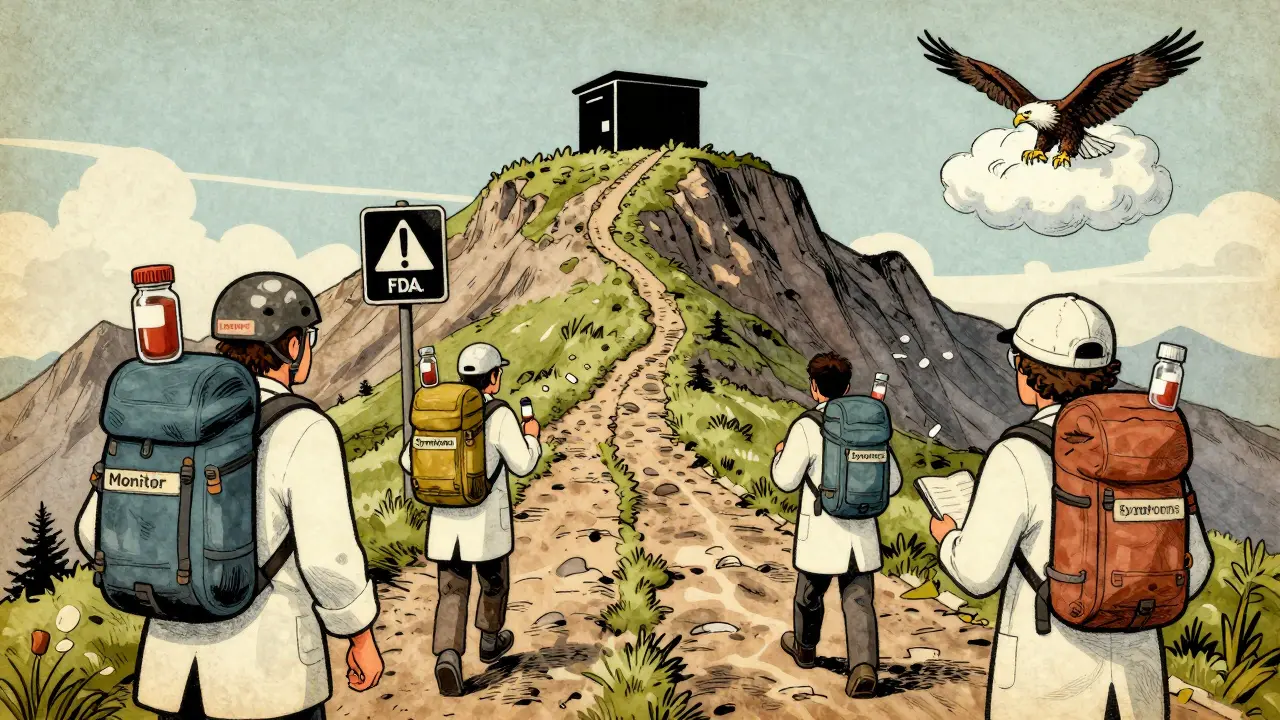
Think of it like this: a black box warning is like a warning sign on a mountain trail. It doesn’t mean don’t hike. It means: There’s a cliff ahead. Wear a helmet. Don’t go alone. Know your limits.
Medications with black box warnings are often used for serious conditions - cancer, epilepsy, severe depression, autoimmune diseases. For many people, they’re the only thing that works. The warning is there so you and your doctor can make a smart choice, not a fearful one.
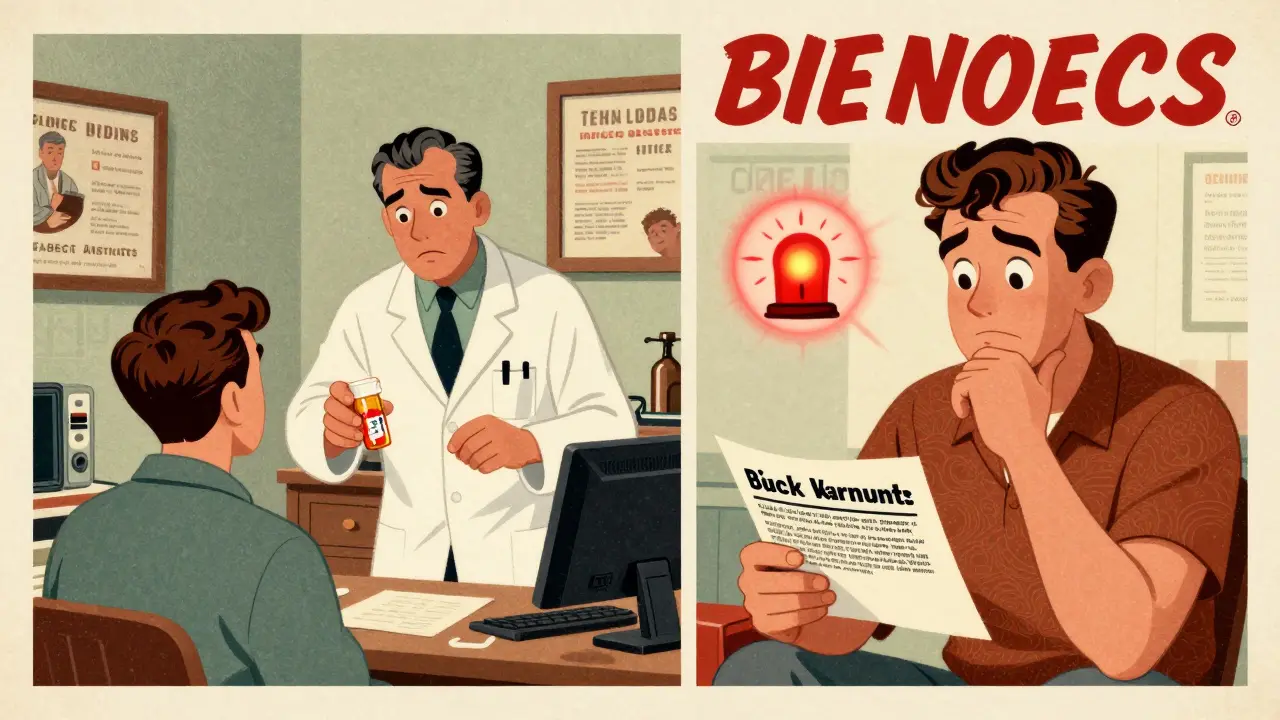
How Do These Warnings Get Added?
It’s not quick. The FDA doesn’t rush. Here’s how it usually happens:
- A drug is approved after clinical trials.
- It’s used by thousands of patients over years.
- Doctors or patients report serious side effects to the FDA’s MedWatch system - over 1.2 million reports are filed each year.
- The FDA reviews the data. If patterns emerge, they investigate further.
- If the risk is confirmed, they contact the drug maker and demand a boxed warning.
- The company writes proposed wording. The FDA approves it. Then it goes on every box, bottle, and insert.
This process can take years. That’s why newer drugs often don’t have these warnings yet. They haven’t been used long enough. That’s why it’s so important to report any strange reaction - even if you think it’s minor. You might be helping prevent the next warning.
What Should You Do If Your Medicine Has One?
Don’t panic. Don’t stop. Do this:
- Ask your doctor: "What’s the specific risk here? How likely is it? Are there safer alternatives?"
- Ask your pharmacist: "What signs should I watch for? When should I call for help?"
- Know the red flags: If the warning mentions liver damage, watch for yellow skin, dark urine, or constant fatigue. If it mentions suicidal thoughts, track your mood daily. Write it down.
- Don’t rely on Google: A Reddit post or a blog won’t tell you how this applies to you. Your doctor has your history. They know your risks.
- Keep the warning visible: Tape the insert to your fridge. Set a reminder on your phone to check in with your doctor every 3 months.
Some drugs with black box warnings - like certain antidepressants or blood thinners - are so critical that stopping them suddenly could be deadly. That’s why the warning doesn’t say "don’t take." It says: "Take with care. Monitor closely. Report anything unusual."
How Are These Warnings Changing?
The system is evolving. In 2024, the FDA issued 37 new or updated black box warnings - more than ever before. Why? Because they’re getting better at spotting problems.
Since 2008, the FDA’s Sentinel Initiative has used data from millions of electronic health records to find hidden risks. In 2022, they started using AI tools to scan reports faster. That means warnings are coming out quicker. A safety signal that used to take 2 years to confirm now takes 6-9 months.
Also, more warnings are being paired with Risk Evaluation and Mitigation Strategies (REMS). These are extra rules - like mandatory training for doctors, special pharmacies, or required blood tests before and during treatment. The goal? Reduce harm without stopping access.
And in 2025, the FDA plans to launch a real-time digital labeling system. Imagine your drug’s warning updating automatically as new data comes in - instead of waiting for a new print run. That’s the future.
Final Thought: It’s Not About Fear. It’s About Awareness.
Black box warnings aren’t punishment. They’re protection. They’re the FDA saying: "We didn’t see this in trials. But we see it now. And we’re going to make sure no one else gets hurt without knowing why."
Many people live full, healthy lives on medications with these warnings. They’re not rare. They’re not failures. They’re tools - powerful, precise, and demanding respect.
If you’re on one of these drugs, you’re not at risk just because of the warning. You’re at risk if you ignore it. Stay informed. Stay involved. Ask questions. And remember: your doctor didn’t prescribe this drug lightly. They weighed the danger. They weighed the alternative. And they chose this because it’s the best option - for you.
Does a black box warning mean I should stop taking my medication?
No. A black box warning does not mean you should stop taking your medication. It means the drug carries serious risks that require careful monitoring. For many people, the benefits of the medication - such as controlling seizures, managing depression, or preventing organ rejection - outweigh the risks. Never stop taking a prescription drug without talking to your doctor first, as stopping suddenly could be dangerous.
How common are black box warnings?
As of 2024, more than 400 prescription medications in the U.S. carry a black box warning. This represents about 15% of all prescription drugs approved by the FDA. These warnings are most common in drugs used for cancer, mental health conditions, autoimmune diseases, and heart conditions - areas where the balance between benefit and risk is especially tight.
Can a black box warning be removed?
Yes, but it’s extremely rare. Since 2000, only 12 black box warnings have been completely removed. The FDA requires overwhelming new evidence proving the risk is far lower than originally thought. Even if a drug is later found to be safer in certain populations, the warning usually stays because the original risk still exists for others. Removing it is not a simple process.
Why don’t doctors always explain black box warnings?
Many doctors assume patients will read the insert or are already aware. Others worry about causing unnecessary fear. But surveys show that 78% of patients want to know about these warnings - yet only 42% recall their doctor discussing them. This gap exists because time is short during appointments, and complex risks are hard to explain quickly. Always ask: "Is there a black box warning on this? What does it mean for me?"
Are black box warnings the same in the UK and other countries?
No. The black box warning is a U.S.-specific system used by the FDA. Other countries have similar systems, but they look different. In the UK, the Medicines and Healthcare products Regulatory Agency (MHRA) uses "contraindications," "precautions," and "serious adverse reactions" in the Summary of Product Characteristics (SmPC). The language is less visually dramatic but just as serious. Always check your local drug information.
Can I still get a drug with a black box warning if I’m pregnant?
It depends. Some black box warnings specifically warn against use during pregnancy because of risks like birth defects or fetal death. Others may still be used if the benefit to the mother clearly outweighs the risk to the baby - for example, in cases of life-threatening epilepsy or severe depression. This decision is made case by case, with input from specialists. Never assume a drug is safe or unsafe during pregnancy without talking to your healthcare provider.
Do over-the-counter drugs have black box warnings?
No. Black box warnings only apply to prescription medications. Over-the-counter (OTC) drugs have different safety labels, usually in the "Warnings" section of the packaging. These may include cautions like "do not use if you have liver disease" or "may cause drowsiness." But they do not use the FDA’s black box format, which is reserved for drugs that require a doctor’s supervision due to high-risk profiles.
How do I know if my drug has a black box warning?
Check the medication guide that comes with your prescription - it’s always printed at the top. You can also ask your pharmacist directly. Many pharmacies now include this information on your receipt or in your online pharmacy portal. If you’re unsure, search the FDA’s website for your drug’s name and look for "Boxed Warning" in the labeling. Don’t rely on general internet searches - they can be outdated or misleading.




Write a comment
Your email address will be restricted to us