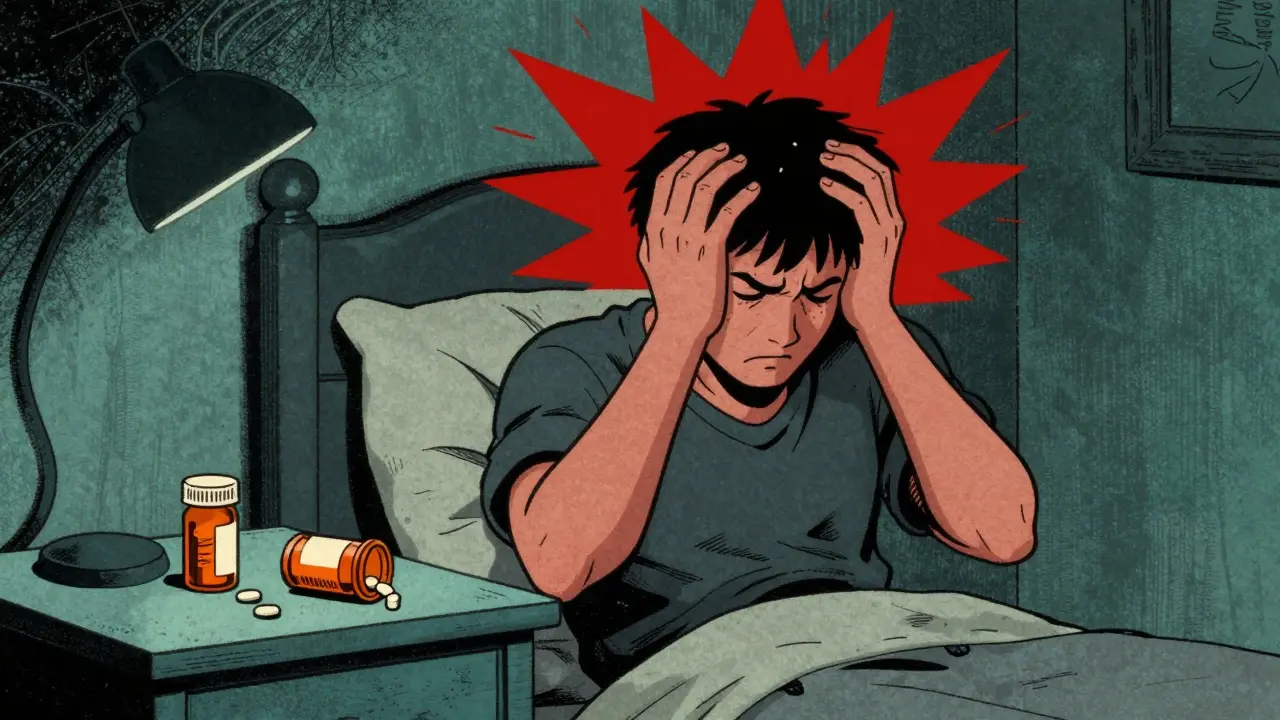
Imagine waking up every single day with a pounding headache. For people with chronic migraine, this isn't a bad dream-it's a daily reality. When traditional pills stop working or cause too many side effects, the idea of using a cosmetic wrinkle-remover to treat a neurological condition sounds strange. But Botox for migraine is a clinically proven strategy that has changed thousands of lives. It's not about smoothing out lines; it's about calming down a hyper-excitable nervous system.
If you're reading this, you've probably tried every over-the-counter pill and a handful of prescriptions, yet the pain keeps coming back. You might be wondering if a series of injections is actually the answer or just another expensive experiment. Let's break down the science, the specific people who actually see results, and what a typical treatment cycle looks like.
Who actually benefits from this treatment?
Not everyone with a headache is a candidate for this therapy. There is a very specific line between someone who might get a placebo effect and someone who will see a dramatic reduction in pain. The primary target is people with chronic migraine. To fit this definition, you need to have at least 15 headache days per month, and at least 8 of those must have classic migraine characteristics (like sensitivity to light or nausea).
If you have "episodic" migraines-meaning you get them a few times a month but not daily-the data shows you likely won't see a significant benefit. The onabotulinumtoxinA (the medical name for Botox) is designed for the chronic sufferer. In fact, the gold standard for who should get it is usually someone who has already failed at least three conventional preventive medications.
Certain people tend to respond even better. If you struggle with medication-overuse headaches (where the painkillers themselves start causing more headaches) or if you have chronic tension-type headaches, you're more likely to see a positive shift. Research from the American Migraine Foundation suggests nearly 45% of chronic migraineurs deal with medication overuse, and for them, Botox provides a way to break the cycle without relying on daily pills.
The science: How does it actually stop the pain?
Most people think Botox just freezes muscles, but that's only a small part of the story for migraine relief. The real magic happens at the nerve level. When a migraine hits, your body releases specific proteins and neurotransmitters that cause inflammation and pain signals. One of the biggest culprits is CGRP (calcitonin gene-related peptide).
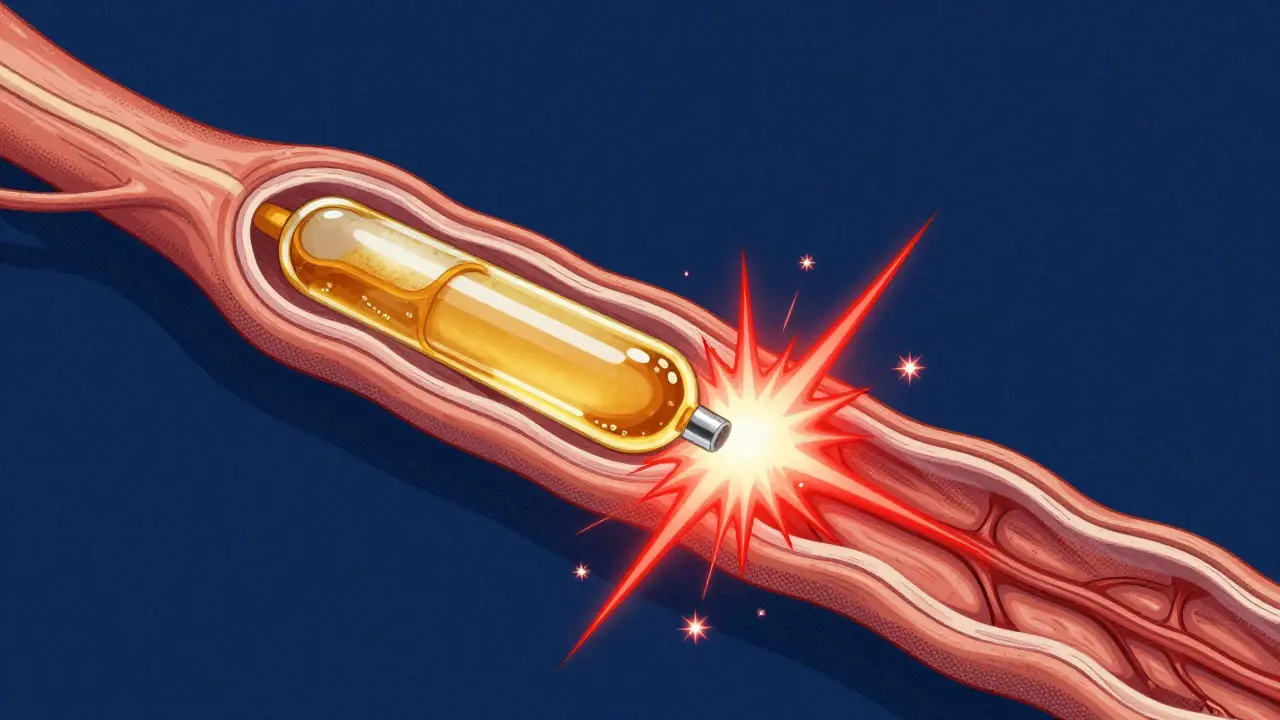
Here is how it works in simple terms: onabotulinumtoxinA blocks the release of these pain-signaling chemicals. It binds to the nerve endings-specifically the C-fibers-and prevents the "pain message" from ever being sent to your brain. By cleaving a protein called SNAP-25, it essentially cuts the communication line that the migraine uses to trigger an attack.
Think of it like a dimmer switch for your pain. It doesn't necessarily turn the pain off instantly like a rescue medication (such as a triptan), but it lowers the overall volume of your nervous system. This reduces both peripheral and central sensitization, meaning your brain becomes less reactive to the triggers that usually start a migraine.
What happens during a treatment session?
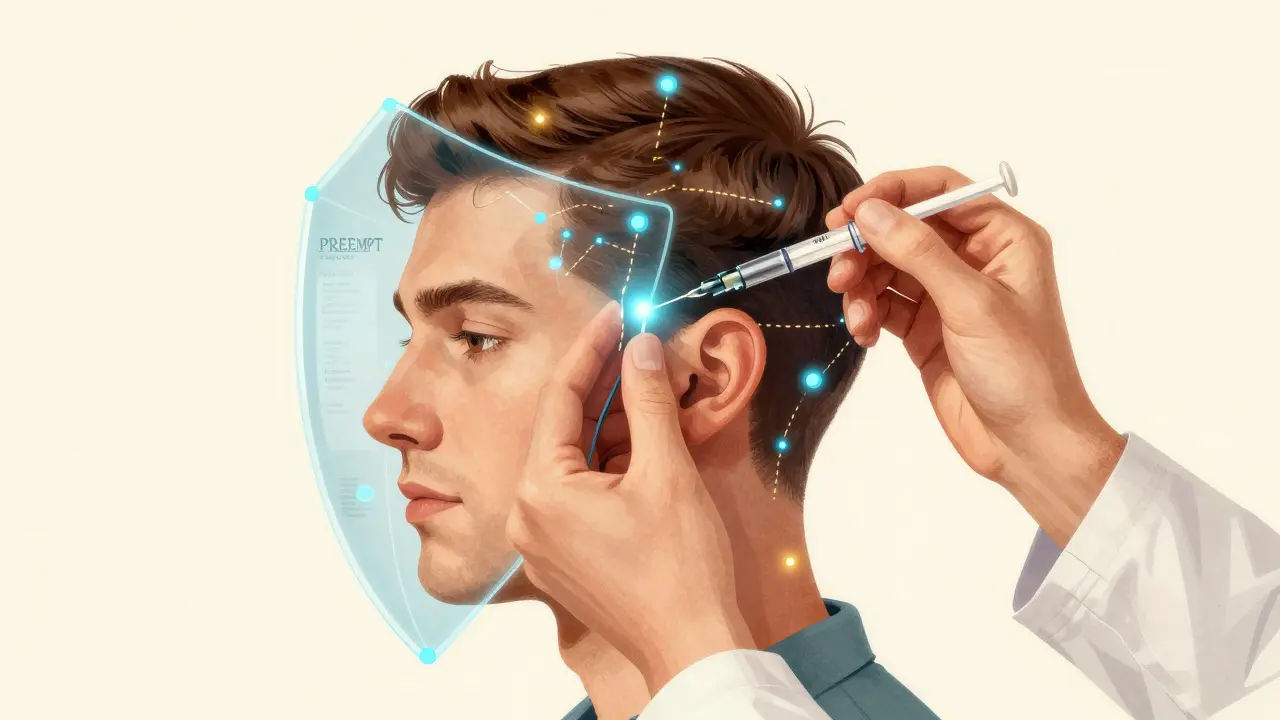
Getting Botox for migraines is very different from getting a few shots in the forehead for wrinkles. Doctors follow a very strict set of rules called the PREEMPT protocol. This isn't a random process; it's a precise map of 31 to 39 injections across seven specific areas of the head and neck.
During a typical 15-minute session, a neurologist will target muscles in your forehead (frontalis), between your eyebrows (corrugator and procerus), your temples (temporalis), the back of your head (occipitalis), and your neck and shoulders (cervical and trapezius). The goal is to create a "shield" of medication that intercepts pain signals before they reach the brain.
| Feature | Botox (onabotulinumtoxinA) | Topiramate / Propranolol | CGRP Monoclonal Antibodies |
|---|---|---|---|
| Administration | Injections every 12 weeks | Daily pill | Monthly injection/infusion |
| Side Effect Profile | Low (mostly local neck pain) | Higher (fatigue, mood changes) | Low to Moderate |
| Onset of Action | Slow (peaks after 3-4 cycles) | Moderate | Relatively Fast |
| Main Benefit | Non-systemic (no organ stress) | Easier access/lower cost | Highly targeted biology |
Managing your expectations: The timeline and costs
One of the biggest mistakes patients make is giving up too early. Botox is not an overnight fix. While some people feel a difference after the first round, a huge chunk of patients-around 61%-don't hit their maximum benefit until their third or fourth treatment cycle. You have to be patient and keep a detailed headache diary to see if the frequency is actually dropping.
The cost is another hurdle. Without insurance, a single session can range from $1,500 to $1,800, leading to annual costs upwards of $7,000. However, because this is an FDA-approved treatment for a chronic condition, many major insurance providers cover it. The catch? They usually require a "paper trail." You'll likely need to prove that you've tried three other preventives and that you've tracked your headaches for at least three months.
In terms of side effects, most people find it much easier to tolerate than oral drugs. You might feel some soreness at the injection site or have a mild headache for a day or two. A small percentage of people might experience a drooping eyelid (ptosis), but this is generally temporary.
Combining therapies for better results
The newest trend in neurology is "combination therapy." For a long time, doctors thought you had to choose between Botox and the newer CGRP monoclonal antibodies (like erenumab). Now, evidence suggests that using both together can actually be a powerhouse move.
Because Botox hits the C-fibers and CGRP antibodies hit a different part of the pain pathway, they work synergistically. Recent data indicates that people using both have a much higher responder rate-around 68%-compared to those using just one. If you're still struggling after a few rounds of Botox, it might be worth asking your specialist if adding a CGRP blocker is a viable option for your specific phenotype.
Is it right for you? A quick checklist
Before you book an appointment, ask yourself these questions to see if you fit the profile of a successful candidate:
- Do I have 15 or more headache days per month?
- Have I tried (and failed) at least three different preventive medications?
- Am I struggling with the side effects of oral medications (like brain fog or weight changes)?
- Am I committed to a 12-week injection schedule for at least 6 months?
- Do I have a board-certified neurologist trained in the PREEMPT protocol?
If you answered "yes" to most of these, the odds are in your favor. Just remember that the experience varies. Some people go from 25 days of pain down to 8, while others see a more modest reduction. The goal isn't always zero headaches-it's about returning your quality of life to a point where you can actually function.
Does Botox work for a migraine that is happening right now?
No. Botox is a preventive treatment, not a rescue medication. It is designed to reduce the frequency and severity of future attacks, not to stop an active migraine. For acute pain, you still need triptans, gepants, or other abortive medications.
How long does the effect of one Botox session last?
The effects typically last about 12 weeks, which is why the injections are scheduled on a three-month cycle. While the medication stays in the system, the "preventive shield" begins to wear off around the 10-12 week mark, leading most patients to schedule their next appointment then.
Will Botox make my face look frozen or change my expression?
Unlike cosmetic Botox where high doses are used to completely freeze a muscle, migraine injections use smaller doses spread across many more sites. Most patients do not notice any change in their facial expressions, as the goal is nerve modulation rather than total muscle paralysis.
Can I get Botox if I am an adolescent?
Yes, the FDA expanded the indication for onabotulinumtoxinA to include adolescents aged 12-17 who suffer from chronic migraine. Clinical trials have shown a significant reduction in monthly headache days for this age group compared to a placebo.
What happens if I miss an injection appointment?
Missing a session can lead to a return of the migraine frequency. Because the treatment relies on a cumulative effect over several cycles, a gap in treatment can "reset" some of the progress. It's best to stay as close to the 12-week schedule as possible.





Write a comment
Your email address will be restricted to us