Medication Heartburn Risk Checker
Not sure why your daily pills cause pain? Enter your medication type and habits below to get a personalized risk assessment.
Risk Assessment
Why is your risk high/low?
Prescribed Action Plan
When the Cure Feels Worse Than the Problem
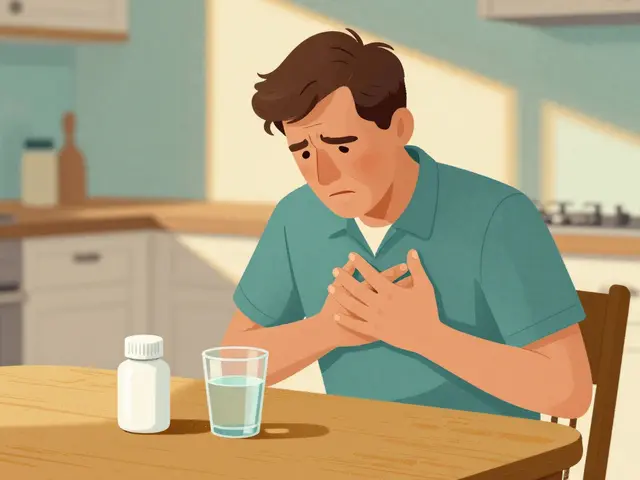
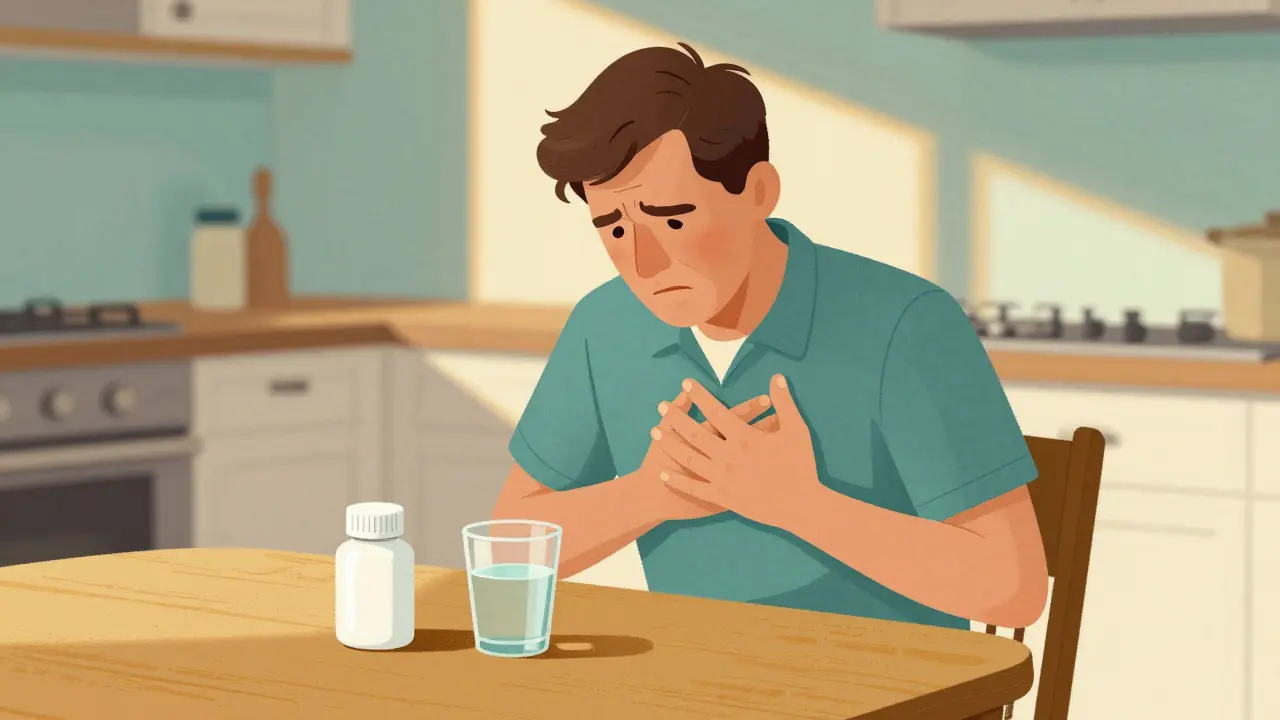
It sounds simple enough-take the pill, feel better-but sometimes the cure feels worse than the ailment. You pop your morning tablet for arthritis or high blood pressure, and by lunchtime, you’re burning up internally. That sharp sting in your chest isn’t just indigestion; it could be your body reacting to life-saving treatment.
This issue sits right at the intersection of comfort and necessity. According to recent health data, approximately 40% of people deal with heartburn symptoms monthly. More concerning, medications contribute to about 20% of those cases where diet alone isn't to blame. If you’ve ever wondered why a healthy lifestyle choice like taking your daily prescription leaves you queasy, you aren't imagining it. We need to understand exactly which pills trigger this response and how to neutralize them without quitting your treatment plan.
The Usual Suspects: Which Meds Trigger Heartburn?
Not every medication causes gastrointestinal distress, but some offenders show up regularly. Knowing your medicine’s identity helps you anticipate and prevent symptoms before they ruin your day. The list of problematic drugs breaks down into three major families based on how they damage your digestive tract.
Non-Steroidal Anti-Inflammatory Drugs (NSAIDs) are the most common culprits. These painkillers, including ibuprofen and aspirin, inhibit protective prostaglandins in the stomach lining. Clinical observations suggest ibuprofen causes heartburn in 20-30% of users. If you rely on these for chronic joint pain, the risk jumps significantly. Long-term use can increase ulcer risk from a low baseline to nearly 30% in some groups. This happens because these drugs strip away the mucous barrier that protects your stomach walls from acid.| Drug Class | Common Names | Estimated Risk | Mechanism |
|---|---|---|---|
| NSAIDs | Ibuprofen, Aspirin | 20-30% | Stomach lining irritation |
| Tetracyclines | Doxycycline, Minocycline | 12% (improper use) | Pill erosion in esophagus |
| Calcium Channel Blockers | Amlodipine, Nifedipine | 10-20% | Relaxes lower esophageal sphincter |
| Bisphosphonates | Alendronate | 5-10% | Severe direct chemical injury |
Then there are antibiotics. Specifically, tetracyclines like Doxycycline are notorious for pill-induced esophagitis. If you swallow the capsule too quickly without enough liquid, it can stick to your throat wall and burn a hole through it. Studies show this occurs in 12% of patients who neglect proper administration techniques. Finally, blood pressure medications known as calcium channel blockers relax the muscle valve between your stomach and throat. When that valve stays loose, acid sneaks upward, creating that familiar sour taste.
Why Your Meds Burn: Understanding the Mechanics
To fix the problem, you have to look at how the chemistry works inside you. There are essentially three ways a drug triggers a flare-up, and knowing which one applies to you dictates the solution.
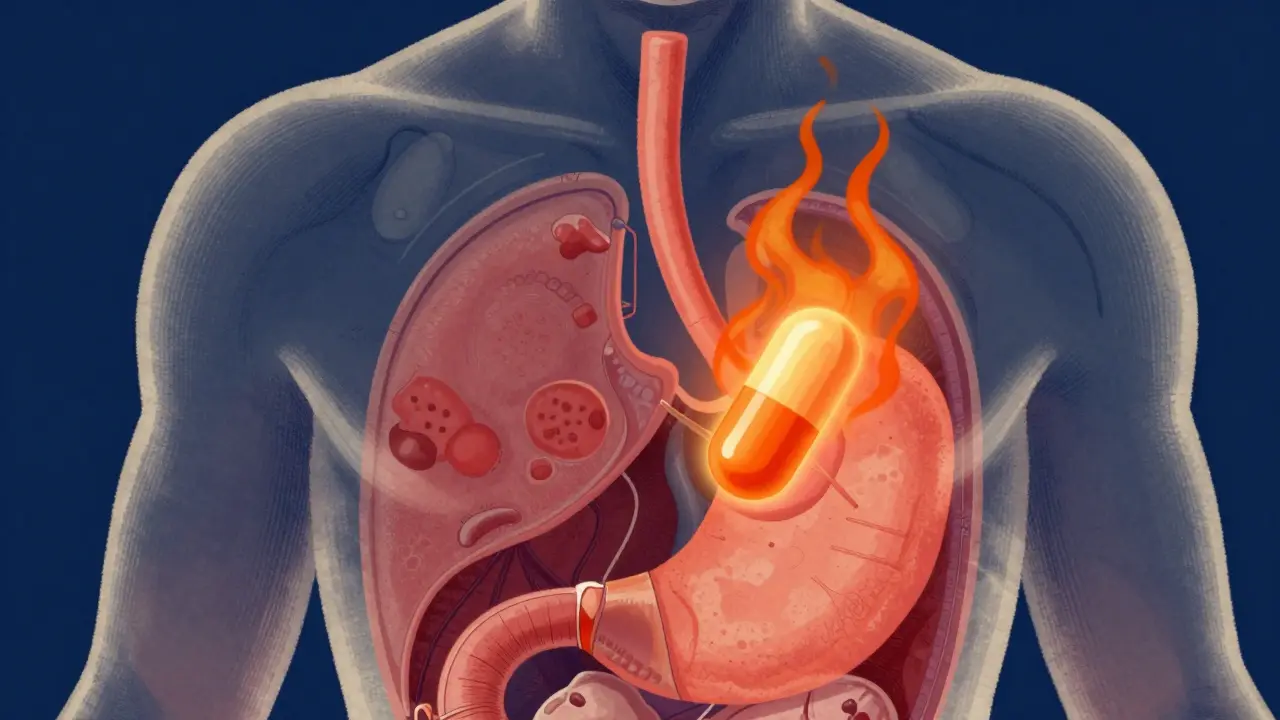
Direct Irritation: Think of this like pouring bleach into a wound. Acidic medicines like potassium chloride or bisphosphonates can eat away at the tissue lining your esophagus. This is why remaining upright after swallowing is critical; gravity keeps the pill moving downward instead of dissolving against your throat.
Sphincter Relaxation: The lower esophageal sphincter (LES) acts as a gatekeeper. Drugs like asthma inhalers or beta-blockers can weaken this gate. Once the tension drops by even 30%, acid reflux becomes much easier for the stomach to push through. This type of heartburn feels more like a general burning sensation rather than a sharp sting.
Acid Production Increase: Some compounds tell your stomach to pump out more acid than necessary to digest the medication itself. While less common than direct irritation, it still leads to that gnawing emptiness you might feel hours after taking the dose.
Actionable Steps to Stop the Burning Now
You probably don't want to stop taking your prescription just because it hurts your stomach. Fortunately, you can usually manage the side effects without compromising your therapy. Experts recommend a strict protocol of intake methods that drastically lowers the danger.
- The Water Rule: Consume a full 8oz glass of water with every pill. This decreases esophagitis risk by 60-70% for tetracyclines and similar irritants. A sip isn't enough; you need volume to wash the pill through.
- The Gravity Test: Remain upright for at least 30 minutes after swallowing. Lying down immediately invites the contents to pool in your esophagus. For bisphosphonates, this window extends to 60 minutes to prevent severe injury.
- Food Buffering: Taking NSAIDs with a meal reduces heartburn incidence by 40-50%. However, be careful here. Do not eat before taking certain antibiotics or bone-building drugs, as food blocks their absorption entirely.
- Post-Meal Timing: If you must take a medication that requires an empty stomach, wait until at least 1 hour after breakfast. Taking anything with just a mouthful of water is a recipe for trouble.
Pharmaceutical Backups: Antacids vs. PPIs
Sometimes behavioral changes aren't enough. Your pharmacist or GP might suggest adding a supportive medication to protect your gut. These come in two distinct tiers.
Over-the-Counter Antacids: Taking an antacid 30 minutes before an NSAID can cut heartburn risk by about 35%. They neutralize existing acid but offer short-term relief. They are good for occasional flare-ups but might not stop deep tissue damage caused by chronic NSAID use.
Proton Pump Inhibitors (PPIs): Drugs like omeprazole are stronger tools. Data indicates they reduce ulcer risk by 70-80% in high-risk patients taking chronic NSAIDs. These suppress acid production at the source. You typically take these in the morning, separate from your evening painkiller. If you find yourself relying on Tums weekly, ask your doctor about a PPI trial.

Red Flags: When to Drop Everything and Call a Doctor
There is a fine line between uncomfortable and dangerous. Most medication heartburn resolves with adjustments, but persistent exposure can lead to Barrett's esophagus or strictures over time. You need to watch for specific warning signs that indicate damage beyond simple inflammation.
Immediate medical attention is required if you experience chest pain that radiates to your arm, difficulty swallowing solid foods, or blood in vomit or stool. These occur in roughly 1-5% of severe cases but signal that the mucosal barrier has failed. Dr. John Smith from the Center for Esophageal Disorders notes that while 95% of pill esophagitis is preventable, ignoring early symptoms leads to hospitalization in chronic cases. Never discontinue prescribed medications abruptly-stopping beta blockers or steroids suddenly can be more dangerous than the heartburn-but do consult a physician immediately to adjust the dosage or switch agents.
Frequently Asked Questions
Can I take my painkillers with milk to avoid heartburn?
While milk buffers stomach acid temporarily, it is not recommended for long-term protection. Dairy products can increase acid production shortly after consumption, potentially worsening reflux later. Stick to a meal or a full glass of water instead.
How do I know if my heartburn is from food or medication?
If the burning starts predictably within 2-4 hours of taking a specific pill regardless of what you ate, it is likely medication-induced. Dietary heartburn usually correlates directly with spicy or fatty meals.
Is liquid medication safer than pills for the throat?
Generally, yes. Liquid formulations bypass the mechanical friction of a pill stuck in the esophagus. However, some concentrated liquids are highly acidic themselves. Always confirm with your pharmacist.
Can heartburn cause permanent damage to the esophagus?
If left untreated, chronic irritation can lead to Barrett's esophagus or strictures. About 1-2% of chronic cases develop Barrett's esophagus, which increases cancer risk. Regular monitoring is vital.
Should I switch brands of generic medication?
Different manufacturers may use varying fillers or coating materials. Switching from one generic brand to another can sometimes resolve sensitivity issues. Talk to your pharmacy manager before changing supplies.