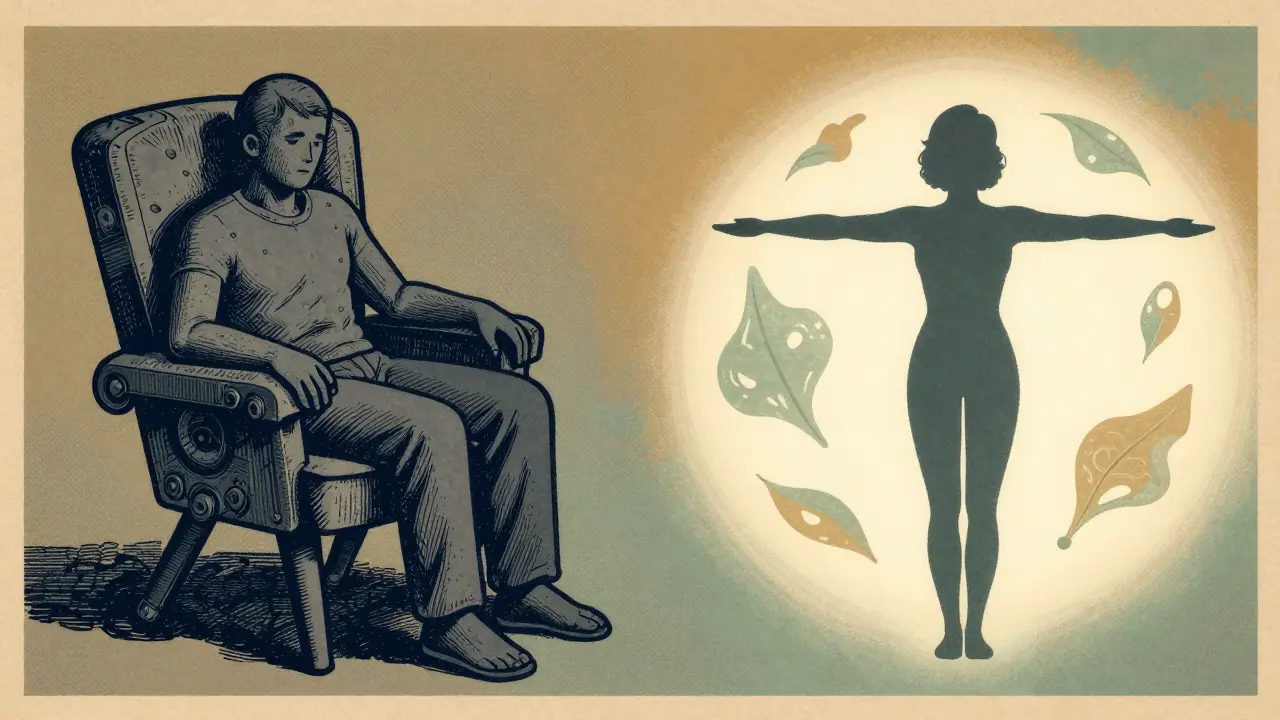
Chronic pain is exhausting. It drains your energy, disrupts your sleep, and often leaves you feeling trapped in your own body. For years, the standard response has been medication or aggressive physical therapy. But what if the solution wasn’t about pushing harder, but moving smarter? Yoga is an ancient practice combining postures, breath control, and meditation that improves flexibility and reduces stress. Alongside it, Tai Chi offers a different approach. These aren't just fitness trends; they are evidence-based tools that can actually change how your brain processes pain signals.
You don't need to be flexible or athletic to benefit. In fact, these practices are designed specifically for people who *aren't* able to do high-impact exercise. This guide breaks down exactly how yoga and tai chi work for pain, which one might suit you better, and how to start safely without triggering a flare-up.
How Gentle Movement Changes Your Brain's Pain Response
It’s easy to think of pain as purely physical-a broken bone or an inflamed joint. But modern neuroscience shows us that pain is also a signal processed by the brain. When you’re stressed or anxious, your nervous system amplifies those signals. This is called central sensitization. Yoga and tai chi interrupt this cycle.
Both practices are classified as mind-body interventions. They work by engaging two key mechanisms:
- Stress Reduction: Deep, rhythmic breathing activates the parasympathetic nervous system (the "rest and digest" mode). This lowers cortisol levels, which are known to increase inflammation and pain sensitivity.
- Body Awareness: By focusing on slow, deliberate movements, you rebuild the connection between your brain and your muscles. This helps reduce the "fear of movement" that many chronic pain sufferers develop. When you stop fearing motion, your muscles relax, which often reduces pain immediately.
A 2021 study from Florida Atlantic University analyzed over 3,400 participants and found that these movement-based therapies address both the physical symptoms and the psychological burden of chronic pain. You aren't just stretching a muscle; you're calming the alarm system in your head.
Tai Chi vs. Yoga: Which Is Right for Your Pain?
While both practices share roots in mindfulness and breathwork, their execution differs significantly. Choosing the right one depends on your specific condition and personal preference.
| Feature | Yoga | Tai Chi |
|---|---|---|
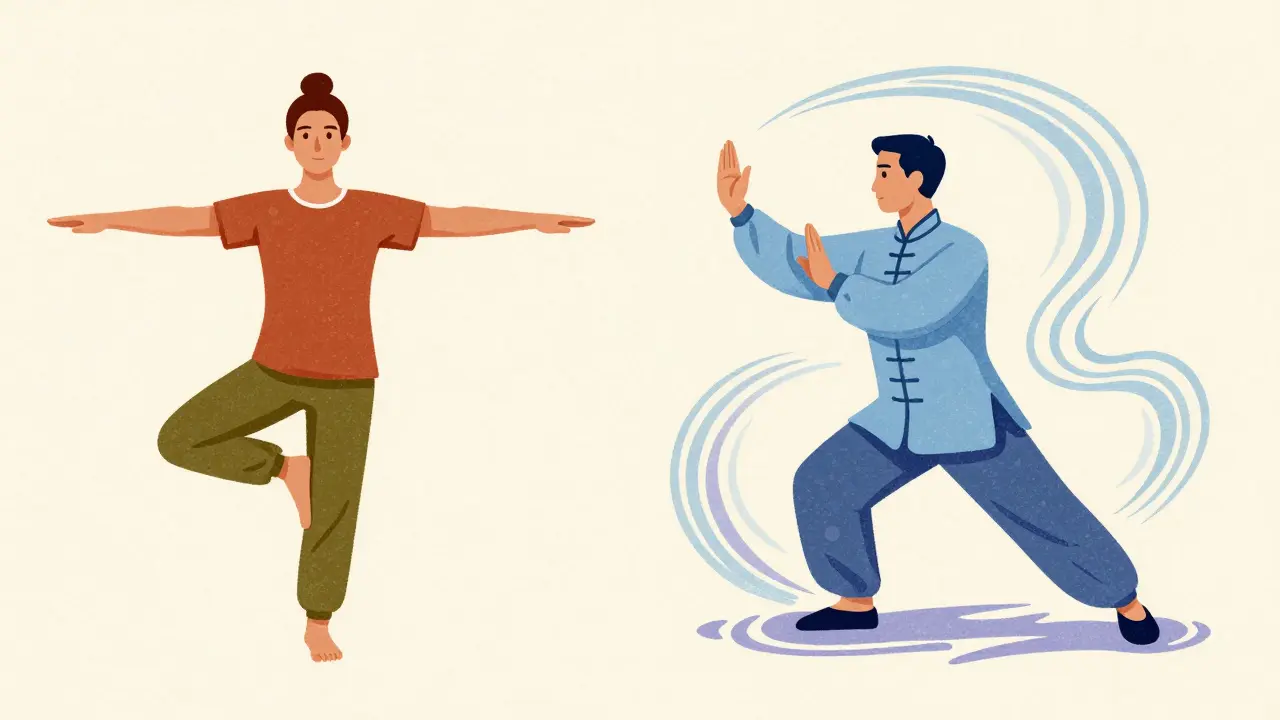
| Movement Style | Static poses (asanas) held for several breaths, interspersed with flows. | Continuous, flowing sequences resembling slow-motion martial arts. |
| Primary Benefit | Flexibility, strength, and deep tissue release. | Balance, coordination, and joint stability. |
| Best For | Back pain, neck pain, and stiffness. | Knee osteoarthritis, fibromyalgia, and fall prevention. |
| Intensity | Variable (can range from very gentle to intense). | Consistently low-impact and gentle. |
| Learning Curve | Can be steep due to complex poses; requires props for beginners. | Gentle progression; easier to adapt for limited mobility. |
If you struggle with balance or fear falling, tai chi is often the safer starting point. Its continuous motion keeps joints lubricated without locking them into static positions that might feel restrictive. If your primary issue is tightness and stiffness, yoga’s focus on holding stretches may provide more immediate relief.
Evidence-Based Benefits for Specific Conditions
General advice is helpful, but specific data is better. Here is what the research says about using these practices for common pain conditions.
Fibromyalgia
This is where tai chi shines. A landmark study published in the New England Journal of Medicine followed 66 participants with fibromyalgia. After 12 weeks, the tai chi group reported a 27% greater reduction in pain compared to a control group doing stretching and wellness education. They also saw significant improvements in sleep quality and depression symptoms. Dr. Chenchen Wang from Tufts Medical Center now considers the evidence robust enough to recommend tai chi as a first-line non-drug treatment for this condition.
Knee Osteoarthritis
For knee pain, tai chi has shown remarkable results. A 2021 review by the National Center for Complementary and Integrative Health (NCCIH) analyzed 16 studies involving nearly 1,000 participants. The protocol that worked best involved 30-to-60-minute sessions, two to four times a week. Participants improved their balance by 18-25%, which is crucial because better balance reduces the uneven load on knee joints, slowing further degeneration.
Neck and Back Pain
Yoga takes the lead here. A 2024 NCCIH systematic review found that yoga combined with heat therapy reduced neck pain intensity by 42% more than standard physical therapy alone. For back pain, longer-duration yoga programs (high-dose) showed significant reductions in pain scores compared to standard care. The key is consistency; benefits typically emerge after 6-8 weeks of regular practice.
Rheumatoid Arthritis
The data here is mixed. Some studies show yoga improves disability scores and pain, while others find no significant difference. If you have rheumatoid arthritis, listen to your body. On days when inflammation is high, even gentle yoga might be too much. Seated tai chi is often a better alternative during flares.
How to Start Safely: A Step-by-Step Guide
Starting any new movement practice when you’re in pain can be intimidating. The goal isn't to push through pain, but to move within your comfort zone. Here is a safe way to begin.
- Consult Your Doctor: Especially if you have severe mobility issues or recent injuries. Ask if there are specific movements you should avoid.
- Start Small: Don’t aim for an hour-long session. Begin with 15-20 minutes daily. Harvard Health recommends this duration for the first two weeks to build tolerance.
- Choose the Right Style:
- For Yoga: Look for Hatha or Restorative yoga. Avoid Vinyasa or Power yoga initially, as they are fast-paced and demanding.
- For Tai Chi: Seek out Yang-style or Sun-style classes. These are slower and gentler than Chen-style.
- Use Modifications: Chairs are your friend. Both yoga and tai chi can be done seated. If standing causes pain, stay seated. Use blocks, straps, or walls for support.
- Focus on Breath: If you hold your breath, you’re doing it wrong. Sync your movement with your inhale and exhale. This ensures you stay relaxed.
Common Pitfalls and How to Avoid Them
Even gentle movement can go wrong if approached incorrectly. Here are the most common mistakes I see people make.
Ignoring Pain Flares: About 39% of new users report pain flares during their first few weeks. This is normal as your body adapts, but sharp, shooting pain is not. If you feel sharp pain, stop immediately. Dull ache or mild discomfort is okay; sharp pain is a warning sign.
Choosing the Wrong Instructor: This is critical. A general fitness instructor might not understand chronic pain. Look for teachers certified in therapeutic yoga or tai chi for health. The Pacific Pain Physicians note that improper technique can exacerbate conditions. Ask potential instructors: "Do you modify for osteoarthritis/fibromyalgia?" If they hesitate, keep looking.
Expecting Overnight Results: Pain management is a marathon, not a sprint. Measurable benefits usually take 6-8 weeks. Maximum effects are often seen at 12 weeks. Consistency matters more than intensity.

Accessing Resources: Classes, Apps, and Insurance
You don’t need expensive equipment to start. A non-slip mat and comfortable clothes are enough. However, finding guidance is key.
In-Person Classes: Community centers often charge $10-$15 per class. Clinical programs at hospitals like Mayo Clinic or Kaiser Permanente integrate these practices into pain management protocols. Check if your local hospital offers a "Mind-Body" program.
Digital Options: If mobility is an issue, apps are great supplements. Platforms like Glo or Alo Moves offer subscriptions ($18-$29/month) with specific playlists for "Chronic Pain" or "Arthritis." The Arthritis Foundation’s "Tai Chi for Arthritis" app is also highly recommended for structured, safe routines.
Insurance Coverage: Coverage is expanding. Blue Cross Blue Shield now covers medically supervised yoga and tai chi in 12 states. Additionally, the American Medical Association included codes for billing referrals to these therapies starting in 2025. Ask your provider if they can prescribe a referral, which might get covered under your plan.
Integrating with Other Treatments
Yoga and tai chi are not magic cures that replace all other treatments. They work best as part of a comprehensive plan. The American Chronic Pain Association notes that combining movement therapy with conventional treatments yields 30-40% better outcomes than either alone.
If you are taking medication, do not stop abruptly. Many veterans using VA pain programs reported reducing opioid use after six months of regular tai chi practice, but this was done under medical supervision. Think of these practices as tools that allow you to manage pain with less reliance on drugs over time.
Can yoga or tai chi worsen my chronic pain?
Yes, if done incorrectly. Sharp pain during practice means you are pushing too hard or using poor form. Always start with modified, chair-based versions and work with a qualified instructor who understands chronic pain conditions. Stop immediately if you experience sharp or shooting pain.
How long does it take to feel pain relief from tai chi or yoga?
Most people notice initial benefits after 6-8 weeks of consistent practice (2-3 times per week). Maximum effects for conditions like fibromyalgia and osteoarthritis are typically seen around the 12-week mark. Consistency is more important than intensity.
Is tai chi better than yoga for balance issues?
Generally, yes. Tai chi focuses heavily on weight shifting and continuous balance adjustments, making it superior for improving stability and preventing falls. Studies show tai chi can improve balance metrics by 18-25% in older adults with knee osteoarthritis.
Do I need special equipment to start?
No. Comfortable clothing is sufficient. For yoga, a non-slip mat is helpful but not strictly necessary. Props like chairs, blocks, and straps are useful for modifications but can often be substituted with household items like a sturdy chair or wall.
Will insurance cover yoga or tai chi classes?
Coverage varies. Some insurers, like Blue Cross Blue Shield in certain states, cover medically supervised programs. With new AMA coding starting in 2025, physician referrals may be billable. Check with your provider and insurer about "medically necessary" movement therapies.